
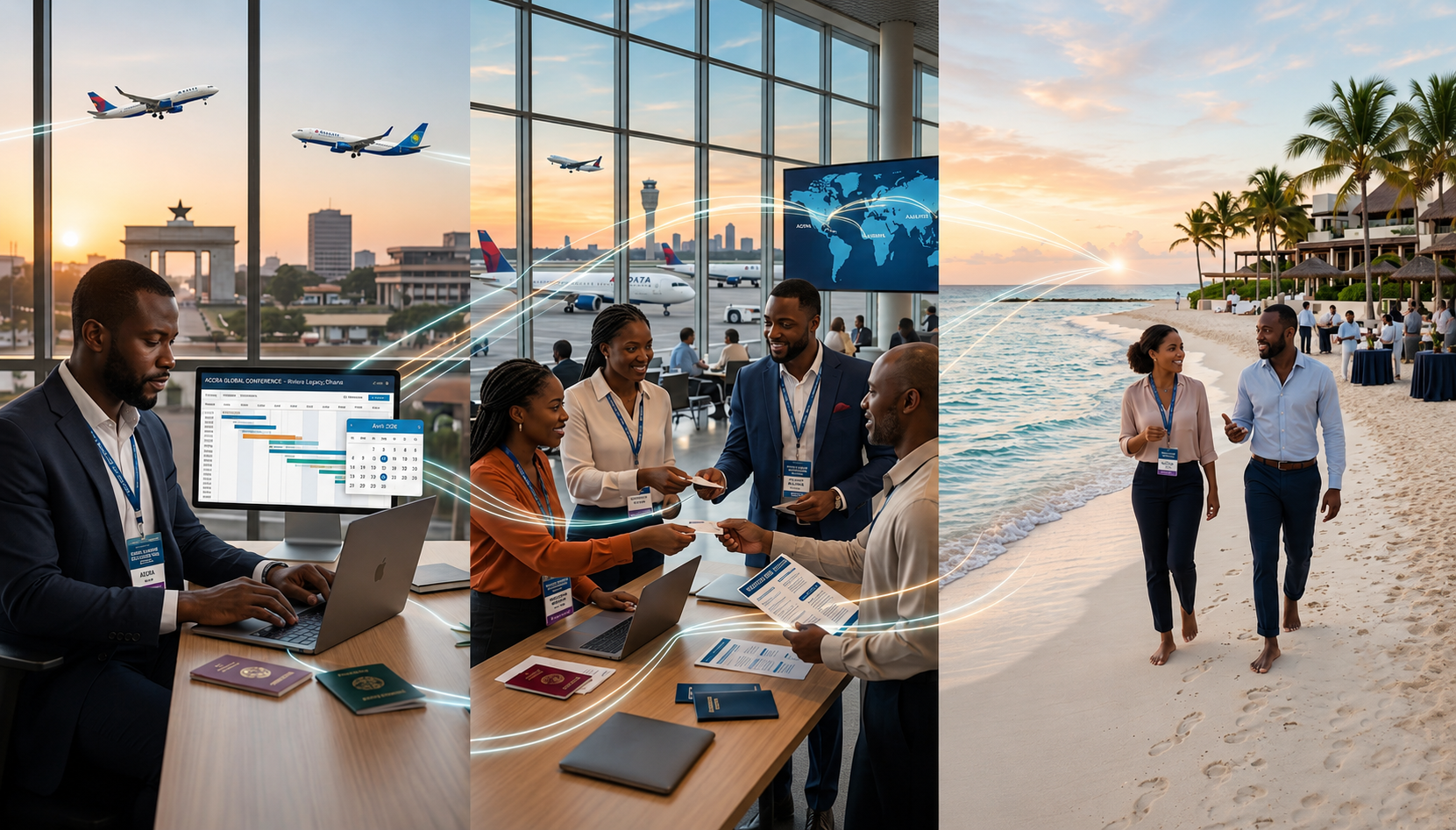
Most people see a broken system and feel frustrated. They complain about it, work around it, or simply accept it as the way things are. But builders see something different. Instead of asking, "Why doesn't someone fix this?" they ask a different question: "What would it take to fix it?" That may sound like a small difference, but it changes everything. Because the moment you stop seeing problems as obstacles and start seeing them as opportunities, your relationship with the world changes.
And that's exactly how many great companies begin. Think about M-Pesa, Flutterwave, Andela, or Calendly. Each started with someone noticing a problem that millions of people had learned to live with. But instead of accepting it, they became curious. They wanted to understand why the problem existed and, more importantly, what it would take to solve it.
That's the mindset we find again and again among Afro-Global builders. They come from different countries, different backgrounds, and different industries. Some grew up with very little. Others had access to opportunities from the beginning. And yet they often share the same way of looking at the world. They pay attention to what is missing. While most people focus on what already exists, builders notice what doesn't. They notice the gaps, the friction, the inefficiencies, and the opportunities hiding in plain sight. And once they see them, they can't stop thinking about them.
That's why this article is not really about companies. It's not even about entrepreneurship. It's about a way of thinking. Because before every company, there is an idea. Before every institution, there is a question. And before every breakthrough, there is someone who sees the world differently. The companies come later. The funding comes later. The recognition comes later. First comes the ability to see what others overlook.
And that's the real lesson. Opportunities are rarely invisible. Most of the time, they are hiding inside problems that everyone else has learned to ignore.
So the question is not whether opportunities exist.The question is whether you have the clarity to see it and the conviction to act before anyone else does.
Builders See Opportunities Others Ignore
In the mid-1990s, most international observers looked at Africa's telecommunications sector and saw a difficult proposition. Infrastructure was limited, regulatory environments were unpredictable, and mobile phones remained out of reach for much of the population. To many investors, the continent appeared to offer more uncertainty than opportunity.
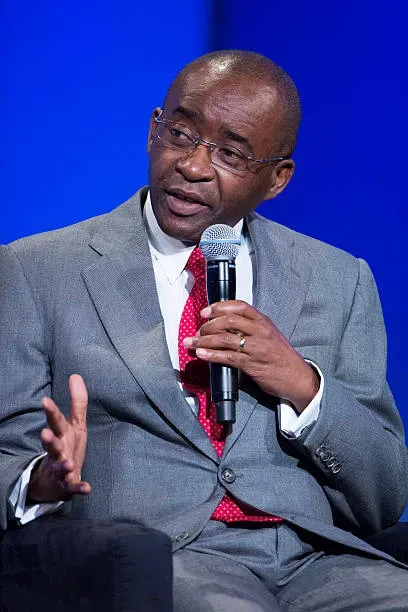
Yet while others focused on what Africa lacked, Strive Masiyiwa focused on what was missing. The distinction may seem subtle but in reality, it is profound.
For five years, Masiyiwa fought a legal battle against the Zimbabwean government for the right to establish a private mobile telecommunications network. Most entrepreneurs would have interpreted such resistance as a signal to abandon the idea. Masiyiwa, however, reached the opposite conclusion. Instead of seeing obstacles as evidence that the opportunity was too difficult, he saw them as confirmation that the opportunity was larger than most people understood.
When Econet Wireless finally launched in Zimbabwe in 1998, it marked the beginning of a company that would eventually expand across Africa, the United Kingdom, and other international markets. Yet the real story is not the growth of Econet itself. Rather, it is the way Masiyiwa saw the world before that growth became obvious to everyone else.
At the time, hundreds of millions of Africans had never made a telephone call. Most analysts interpreted that reality as evidence of weak market conditions. Masiyiwa, by contrast, interpreted it as evidence of extraordinary unmet demand. Where others saw infrastructure deficits, he saw scale. Where others saw risk, he saw opportunity. And where others saw barriers to entry, he saw the advantages of being early.
Not surprisingly, this pattern appears repeatedly throughout the history of transformative entrepreneurship. Great builders rarely possess information that is unavailable to everyone else. More often, they possess a different framework for understanding the same facts. The information is public. The signals are visible. Yet the opportunity remains hidden because most people are looking at the surface rather than the underlying reality.
Indeed, opportunities rarely arrive looking like opportunities. More often, they appear as inefficiencies, frustrations, gaps, or problems that society has gradually learned to tolerate. Over time, most people adapt to those conditions. Builders, on the other hand, become curious about them. Rather than accepting the world as it is, they ask why it became that way. And once they understand the answer, they begin imagining what the world might look like if the problem were solved.
That habit of thinking is one of the defining characteristics of Afro-Global builders. Whether they operate in finance, technology, education, media, logistics, or infrastructure, they share a remarkable sensitivity to absence. While most people focus on what already exists, builders pay attention to what should exist but does not. Consequently, their attention is drawn not toward the visible structures of the present, but toward the invisible opportunities of the future.
Masiyiwa's story illustrates this principle with unusual clarity. He did not build Econet because the market was mature. On the contrary, he built it because it was not. The very conditions that discouraged others became the foundation of his conviction.
And perhaps that is the most valuable lesson for aspiring builders today. The question is rarely whether opportunity exists. Instead, the real question is whether you can recognize it while it still looks like a problem.
The greatest opportunities are always hidden inside the problems everyone else has given up on solving.
Builders Think In Decade
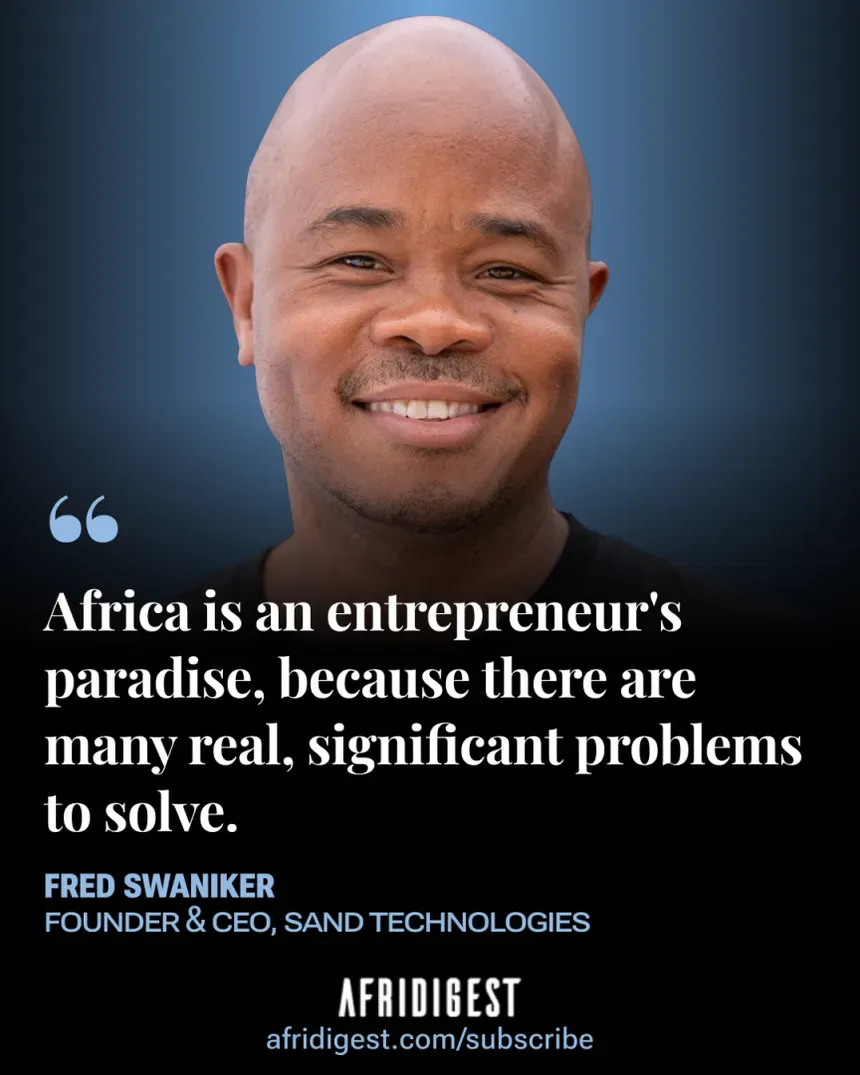
When Fred Swaniker began talking about building a pan-African university in the early 2010s, many people saw the idea as more aspiration than plan. After all, no institution quite like it existed at the time. Yet while others focused on what was missing, Swaniker focused on what could be built.
Today, the African Leadership University (ALU) has campuses in Rwanda and Mauritius, has educated thousands of students from across the continent, and has become one of the most closely watched experiments in African higher education.
What makes the story interesting, however, is not simply what Swaniker built, but how he thought.
Because he did not build ALU by optimising for the next quarter or even the next few years. Instead, he started with a much bigger question: what kind of institution would need to exist in 2040 for Africa to reach its full potential?
And once he had an answer, he worked backward.
Rather than allowing the present to define the future, he allowed the future to define what needed to be built in the present. As a result, ALU was not designed merely to solve today's challenges. It was designed to prepare for opportunities that many people could not yet see.
Once again, the pattern is familiar. While most people focus on what exists today, builders often focus on what will be needed tomorrow. And then they begin building it long before everyone else understands why it matters.
The builders who matter most are the ones willing to be misunderstood for years — because they can see what others cannot yet see.
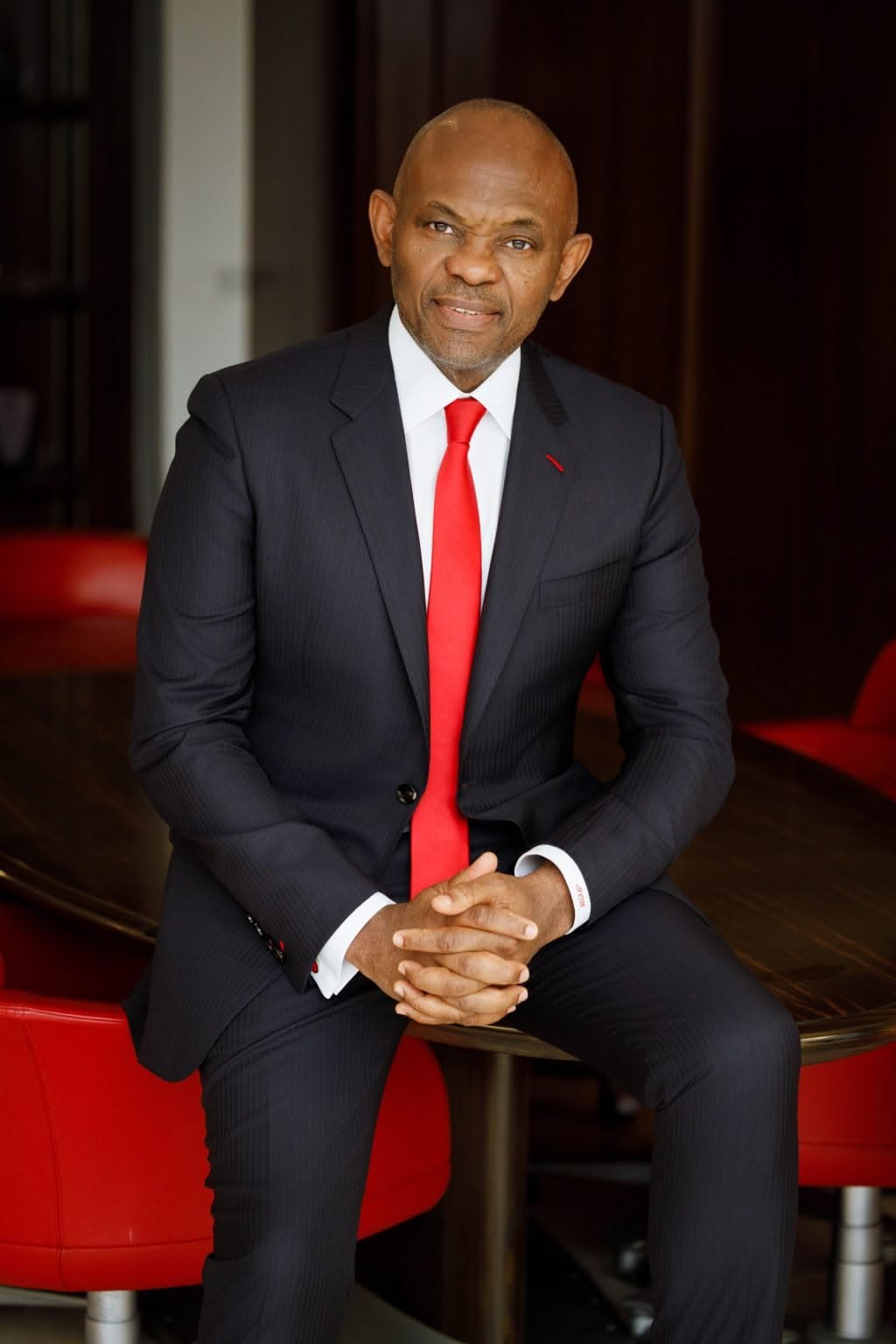
Tony Elumelu has become one of the most influential business leaders on the continent, in part because of his unusual ability to operate across multiple time horizons at once. As the founder of Heirs Holdings and the Tony Elumelu Foundation (TEF), which has committed $100 million to train and support 10,000 African entrepreneurs, he thinks not only about the business opportunities of today but also about the entrepreneurial infrastructure that will shape the next generation. In many ways, his concept of "Africapitalism" is itself a long-term bet on Africa's future.
Yet this kind of thinking is not only strategic. It is also cultural.
Because throughout Africa, many societies have long embraced the idea that success extends beyond the individual. Instead, achievement is often understood as something connected to family, community, and future generations. As a result, long-term thinking is not simply an economic principle; it is embedded in social traditions that have endured for centuries.
Whether it is the Yoruba concept of "ebi," the Ghanaian tradition of "susu" collective savings, or the Senegalese "dahira," these practices represent more than cultural customs. They are systems of cooperation, responsibility, and shared investment. More importantly, they are economic architectures built around time horizons that extend far beyond a single individual or a single generation.
Seen through this lens, builders like Elumelu are not inventing a new way of thinking. Rather, they are applying an old principle to modern challenges. The tools may have changed, but the underlying idea remains the same: build not only for today, but also for those who will come after you.
Builders Build Ecosystems
When M-Pesa launched in Kenya in 2007, it was introduced as a mobile money transfer service. At the time, the innovation was significant in its own right. Yet what made M-Pesa remarkable was not simply what it did at launch but what it made possible afterward.
Over the following fifteen years, M-Pesa evolved from a financial product into an economic ecosystem. As adoption grew, thousands of businesses began building on top of its infrastructure. Micro-insurance services emerged. Agricultural credit platforms expanded. E-commerce and logistics companies found new ways to reach customers. In other words, the original innovation created the foundation for countless others.
This points to one of the most important and often least understood characteristics of great builders. The most consequential builders are rarely creating products alone; instead, they are creating platforms. They build systems, networks, and infrastructure that allow other people to create value as well.
As a result, their impact extends far beyond the success of a single company. Because when a builder creates a platform, they are not only solving a problem for themselves or their customers. They are creating opportunities for thousands of others to build, innovate, and grow.
That is why the ecosystem that emerged around M-Pesa ultimately became more transformative than the original product itself. The money transfer service was the beginning. The platform it enabled was the real breakthrough.
No builder succeeds alone. The greatest builders spend as much energy on their ecosystem as on their own organization.
The same principle can be seen in the story of AfriLabs, a network that today connects more than 500 innovation hubs across Africa. From the beginning, its founders understood that even the most successful hubs would have limited impact if they operated in isolation. A great hub could support entrepreneurs, provide training, and attract investment. Yet a connected network could do something far more powerful.
By sharing knowledge, talent, best practices, and investment intelligence across borders, individual hubs became part of something larger than themselves. As a result, the value of the network grew far beyond the value of any single member. What emerged was not simply a collection of organizations but an ecosystem.

A similar logic can be seen in the work of Maya Horgan Famodu. Through Ingressive Capital, one of the most active early-stage venture funds focused on African technology, she recognized that capital alone is rarely enough to build successful companies. Funding matters, of course. Yet relationships matter too.
As a result, she invested not only in startups but also in the connections between founders across Nigeria, Ghana, Kenya, and the diaspora. By strengthening those relationships, she helped create an environment in which knowledge, talent, opportunities, and capital could circulate more freely. In doing so, she was building more than a portfolio. She was helping to strengthen an ecosystem. The comparison to nature is more than a metaphor.
A forest, after all, is not simply a collection of trees. Rather, it is a complex network of relationships. Nutrients move through the soil. Roots connect beneath the surface. Different species depend on one another in ways that are often invisible to the casual observer. Together, those relationships create a level of resilience and productivity that no individual tree could achieve on its own. The most successful entrepreneurial ecosystems operate in much the same way.

This is also a theme that runs through the work of Ethel Cofie. Throughout her career, she has emphasized the importance of trust as a form of infrastructure. Because in many markets, particularly those where formal institutions are still evolving, business often depends on relationships as much as regulations.
In such environments, reputation becomes a form of capital. Trust becomes a competitive advantage. And community relationships become the foundation upon which commerce is built.
Rather than viewing this as a weakness, many successful builders see it as a strength. Indeed, when networks of trust extend across countries and continents, they can unlock opportunities that formal systems alone cannot create.
Once again, the lesson is clear. The most consequential builders are not simply creating companies. They are creating the conditions that allow other companies, other entrepreneurs, and other opportunities to emerge. In other words, they are not just building businesses. They are building ecosystems.
Builders Think Globally

When Tristan Walker launched Walker & Company in 2013, his mission appeared straightforward: create health and beauty products designed specifically for people of colour, a market that many of the world's largest consumer brands had consistently overlooked. Yet behind that mission was a much deeper insight. Rather than accepting the industry's assumptions, Walker questioned them.
Why were products being designed for some consumers and not others? Why had the needs of millions of people been treated as a niche concern rather than a mainstream opportunity? And perhaps most importantly, what would happen if those customers were placed at the centre of the design process rather than at its margins?
Those questions led to the creation of Bevel, a shaving system specifically designed for men with coarse or curly hair. However, what distinguished the company was not only the product itself. It was the methodology behind it. Walker approached the challenge with the same discipline that Silicon Valley applies to software: raising venture capital, gathering customer feedback, refining the product through iteration, and building a loyal community around the brand. As a result, Walker & Company grew rapidly before being acquired by Procter & Gamble in 2018.
Yet the significance of Walker's story extends beyond a successful exit. Because, at its core, it is a story about visibility.
More specifically, it is a story about recognizing a market that others had rendered invisible.
The global beauty and personal care market for people of African descent represents hundreds of billions of dollars in purchasing power. And yet for years, much of that demand remained underserved. While others saw a niche, Walker saw scale. While others saw a specialized category, he saw a global market hiding in plain sight.
That perspective reflects a pattern that appears throughout the Afro-Global business landscape. Great builders often succeed not because they discover entirely new markets, but because they recognize the value of people and communities that others have failed to see.
In that sense, Walker was building more than a company. He was making a statement.
Because every product reflects a set of assumptions about who matters. Every design decision reflects a choice about whose needs deserve attention. And by building products specifically for consumers who had long been overlooked, Walker demonstrated that good business and representation are not opposing ideas. On the contrary, they can be the same opportunity viewed from two different angles.
Once again, the lesson is familiar. Builders see what others overlook. And sometimes the greatest opportunity is not creating something entirely new, but recognizing the value that was there all along.
The Afro-Global diaspora is not a population divided between two worlds. It is a population that inhabits both simultaneously and that simultaneous habitation is itself a form of capital.
Builders Create Value First
One of the most common mistakes among aspiring entrepreneurs is confusing attention with value. In an era dominated by social media metrics, podcast appearances, conference stages, and personal branding, it has become possible to attract significant visibility while creating relatively little of lasting substance. Yet great builders tend to operate according to a different logic.
Rather than chasing attention, they focus on creating value. And they understand that recognition, influence, and visibility are often the by-products of meaningful work rather than the objective itself.
This distinction matters because attention can be generated quickly; value usually cannot. Attention can be manufactured through marketing; value must be earned through execution.
And while attention is often temporary, value has a habit of compounding over time. That is why the most respected builders rarely begin by asking how to become influential. Instead, they ask how to solve a problem, create an opportunity, or build something useful. Influence, if it arrives, comes later.
The career of Strive Masiyiwa illustrates this principle well. He did not become influential because he sought prominence. Rather, he became prominent because he built organizations that created value for millions of people. The recognition followed the work.
While attention can make people notice you, value is what makes people remember you.
Value is not announced. It is accumulated slowly, through thousands of decisions made in the right direction, compounding over time.
Another characteristic that distinguishes many of the best Afro-Global founders is the depth of their customer understanding. This goes far beyond conventional product development or market research. Because they are often building for communities and markets that global companies have historically overlooked, they develop an unusually intimate understanding of how their customers actually live. In many cases, that understanding becomes one of their most powerful competitive advantages.
Consider the case of Paystack. Its success was not simply the result of strong payment technology. It was also the result of understanding Nigerian merchants at a level that many outsiders could not. The founders understood how trust is built, how smartphones are used, how businesses interact with banks, and how commerce functions in everyday life. As a result, they were able to design solutions that reflected the realities of their market rather than assumptions imported from elsewhere.
Importantly, this kind of knowledge cannot be acquired from reports alone. It comes from presence. It comes from listening. It comes from observation. And perhaps most importantly, it comes from spending enough time with customers to understand the realities behind the data. That is why so many successful Afro-Global founders possess an advantage that external investors and competitors often struggle to replicate. As Maya Horgan Famodu has noted, the best founders understand their markets at a level of granularity that others simply cannot match. In many cases, that depth of understanding becomes their moat.
Yet value creation in the Afro-Global context often extends beyond commercial opportunity. For many builders, there is also a broader sense of responsibility. They understand that lasting prosperity depends not only on successful companies but also on the people who will build, lead, and sustain them in the future.
This idea is central to the work of Fred Swaniker. When he speaks about developing the next generation of African leaders, he is not making a sentimental argument. Rather, he is making a strategic one. Because leadership shapes institutions. Institutions shape economies. And economies create opportunities. Viewed through that lens, human capital is not simply one priority among many. It is the foundation upon which everything else rests.
Infrastructure matters, capital matters, and technology matters. Yet all of them ultimately depend on people. And that may be one of the deepest lessons shared by great Afro-Global builders. They do not simply build products, companies, or organizations. They invest in people, understanding that human potential is often the most valuable asset a society possesses.
The New Afro-Global Builder
Something is shifting; it is not yet fully visible, and the language to describe it is still evolving. Yet across the Afro-Global world, a new generation of builders is emerging with a combination of advantages that no previous generation has possessed. More importantly, they are increasingly aware of those advantages and are learning how to use them strategically.
Unlike many of those who came before them, they move comfortably between worlds. They hold multiple passports, speak multiple languages, and have studied, worked, or lived across different continents. As a result, they understand African markets at a local level while also understanding global markets at a structural one. They can navigate conversations in Lagos, London, New York, Nairobi, Accra, or Abidjan with equal confidence. What was once viewed as displacement is increasingly being recognized as an asset.
Indeed, one of the defining strengths of this generation is its ability to operate across networks rather than within borders. They are able to connect ideas, opportunities, talent, and capital across geographies that previous generations often experienced separately. Consequently, they are developing a perspective that is both deeply local and genuinely global.
At the same time, they are digitally native in ways that matter enormously for business. Because the smartphone revolution reached Africa and its diaspora during the same historical moment, many Afro-Global entrepreneurs in their twenties and thirties have grown up with an intuitive understanding of how technology changes commercial possibilities. They do not see digital tools as additions to business. Rather, they see them as part of the natural environment in which business operates.
This matters because every generation is shaped by the technologies it takes for granted. For previous generations, access to information, markets, and networks was often limited by geography. For today's Afro-Global builders, those constraints are far less restrictive. Ideas travel instantly. Relationships can be built across continents. Markets can be reached from almost anywhere.
As a result, the opportunity set available to this generation is fundamentally different. Not necessarily easier, but broader. And for those capable of connecting multiple worlds, multiple cultures, and multiple networks, the possibilities may be unlike anything that has existed before.
The next generation of Afro-Global builders will not define themselves by where they are from. They will define themselves by what they build and for whom.
They are also, increasingly, investing in each other. The emergence of Afro-focused venture funds such as Ingressive Capital, Partech Africa, TLcom Capital, and Norrsken22 represents a significant shift in the capital ecosystem. For the first time, African and Afro-diaspora founders have access to investors who understand their markets, share elements of their cultural context, and bring networks that extend across both the continent and the global diaspora.
At the same time, the African Continental Free Trade Area has the potential to reshape the economic landscape of the continent. If it achieves even a fraction of its ambitions, it will create a market of 1.3 billion people with a combined GDP of more than $3 trillion. For Afro-Global builders who think in terms of systems, networks, and ecosystems, this represents an extraordinary structural opportunity.
Meanwhile, the technological acceleration of the past decade has created new possibilities. Artificial intelligence, in particular, is becoming a tool that helps compensate for some of the resource constraints that have historically limited African entrepreneurship. As a result, a founder in Kigali with reliable internet access can now deploy capabilities that, only a decade ago, would have required a large team of engineers and substantial financial resources.
Yet perhaps the most significant advantage of this emerging generation is less tangible; it is confidence.
Because today's Afro-Global founders have grown up witnessing African entrepreneurs build billion-dollar companies. They have watched Afrobeats become a global cultural force. They have seen African writers, artists, and thinkers receive some of the world's most prestigious recognitions.
Consequently, they do not carry the same assumptions that shaped earlier generations. Rather than approaching global markets as outsiders seeking permission to participate, they increasingly begin with the assumption that they belong. And that assumption changes everything.
The Builders' Imperative
The world rewards those who build. Not eventually, and not in some distant or abstract future, but with a consistency that becomes difficult to ignore once you begin paying attention. Every piece of infrastructure that exists because someone decided it should. Every institution that shaped thousands of lives because someone believed it was necessary. Every market that opened because a founder trusted their own analysis rather than the prevailing scepticism. None of these outcomes are accidental. Rather, they are the cumulative result of a particular way of engaging with the world.
What this article has attempted to explore is that the Afro-Global world is not merely a backdrop against which this building takes place. Instead, it is a context that sharpens the builder's instinct in distinctive ways. Because to have moved between multiple worlds—cultural, linguistic, economic, and geographic—is often to develop a sensitivity to systems that more narrowly situated thinkers rarely acquire.
Likewise, to have experienced both the continent and the diaspora is to possess a perspective that few others share. It is to understand how ideas travel, how opportunities emerge, how markets connect, and how value moves across borders. In that sense, the Afro-Global experience is not simply an identity. It is also a strategic vantage point.
And for those willing to build, it may be one of the most powerful advantages of all.
The Afro-Global builder's advantage is not where they come from. It is how far they can see — because they have learned to look from more than one place at once.
The critical question is not whether this generation of builders will rise. They are already rising. The evidence can be seen in the funding numbers, in the growing number of successful exits, in the policy rooms where new ideas are being shaped, and in the schools, hospitals, technology platforms, and logistics networks being built across Africa and throughout the global diaspora. In other words, this is no longer a future possibility. It is a present reality.
The real question is whether the institutions, networks, and capital structures surrounding these builders will evolve quickly enough to match the scale of their ambition. Because talent can only move so far without support. Ideas can only scale so far without infrastructure. And ambition, however powerful, still requires systems capable of sustaining it.
Yet even this challenge points back to the central theme of this article. It is, ultimately, a building problem. And builders have always approached such problems in the same way. Rather than waiting for perfect conditions to appear, they create them. Rather than accepting limitations as permanent, they design around them. And rather than asking whether the future is ready, they begin building it anyway.
That, perhaps, is the most important lesson of all. Great builders do not wait for conditions to improve. They improve the conditions. And in doing so, they create possibilities that did not exist before.
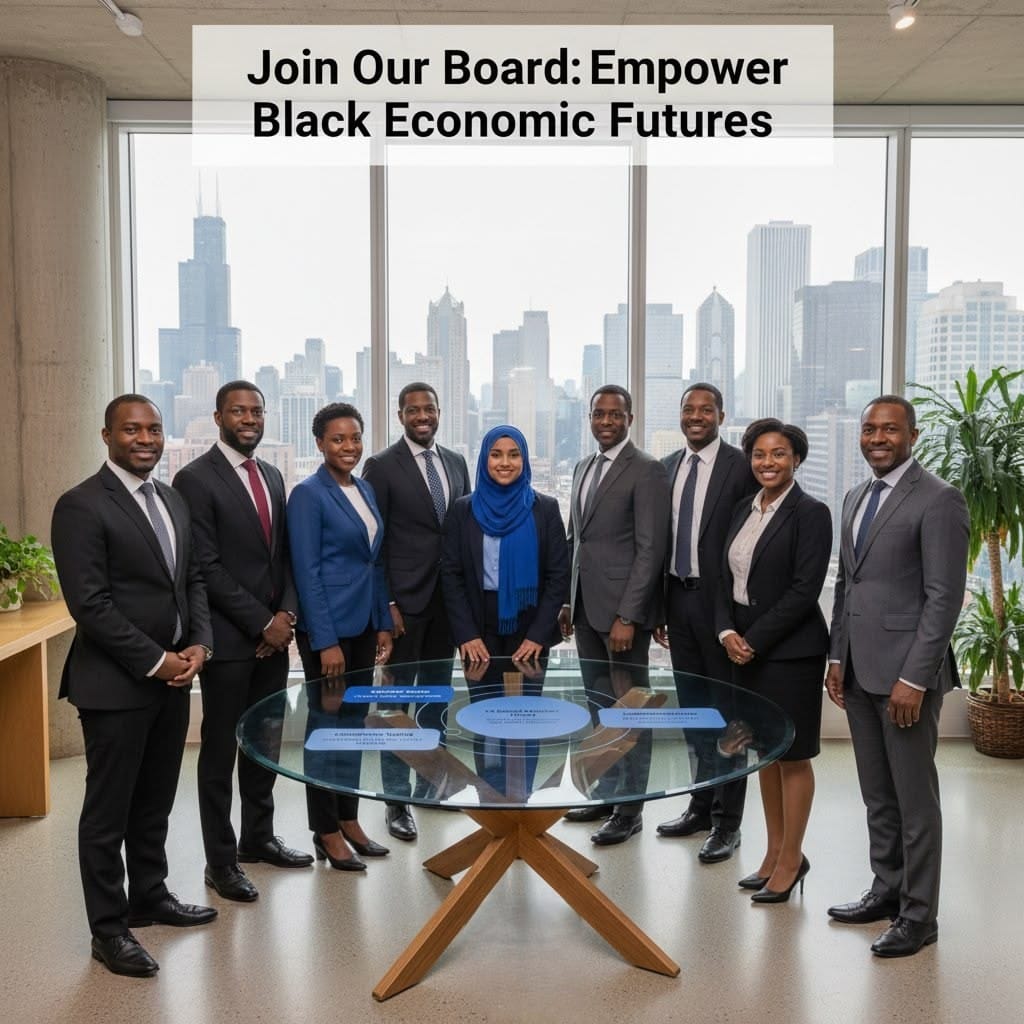
One of the most striking characteristics of great Afro-Global builders is that they rarely think in terms of national borders or even continental boundaries. Instead, they think in networks. They ask different questions. Where is the talent? Where is the capital? Where is the market? And perhaps most importantly, what infrastructure exists to connect them? Once they understand those flows, they build accordingly.
This perspective matters because the Afro-Global economy is increasingly defined not by geography alone, but by movement. Ideas move. Capital moves. Talent moves. Communities move. As a result, some of the most important opportunities emerge not within individual countries, but between them.
The scale of these connections is often underestimated. In 2023, remittances from the African diaspora to the continent exceeded $86 billion, surpassing official development assistance and, in many cases, foreign direct investment. Yet these flows are frequently misunderstood. They are not simply transfers of money from one place to another. Rather, they represent capital in motion, directed by millions of individuals who understand both the realities of the countries they left and the opportunities in the countries they continue to support.
At the same time, cities such as Lagos, Nairobi, Accra, Kigali, and Cape Town have developed increasingly sophisticated startup ecosystems. Yet what distinguishes the most dynamic ecosystems is not simply the presence of capital, talent, or infrastructure. Those ingredients matter, of course. However, what matters even more is circulation.
How freely do ideas move?
How quickly does knowledge spread?
How easily can founders access mentors, investors, and talent?
And how effectively do lessons learned in one market travel to another?
The strongest ecosystems tend to answer those questions well. Because when information circulates efficiently, opportunities multiply. Knowledge compounds. And innovation accelerates.
This is precisely why many of today's most successful Afro-Global companies are so interesting. They are not merely adapting Western business models to African markets. Instead, they are designing entirely new architectures for the realities they understand best. Whether in financial services, logistics, education, commerce, or talent development, they are building systems tailored to the specific conditions of African and Afro-diaspora economies.
Increasingly, those innovations are moving in the opposite direction as well. Ideas that were once developed to solve local challenges are now finding relevance far beyond their original markets. In other words, Africa is no longer simply importing models from the rest of the world. More and more, it is exporting them.
And perhaps that is the clearest sign of a mature ecosystem. Not when it consumes ideas from elsewhere, but when it begins producing ideas that others want to adopt.
The future is not coming. It is being built right now by people who decided not to wait.
◆ FURTHER READING & RESOURCES ◆
On African Entrepreneurship & Ecosystem Development
Mo Ibrahim Foundation Governance Index
Media & Research
Africa: The Big Deal (startup funding data)